Spring Pollen and Your Ducts: Ohio’s Worst Allergy Months
If you’ve lived in the Miami Valley for any length of time, you already know the drill. Around mid-March, the trees wake up, and within days every car in the driveway is coated in yellow-green dust. By April, the grass pollen kicks in. By May, it feels like the whole outdoors is conspiring against anyone with a nose. Ohio consistently ranks among the most challenging states in the country for allergy sufferers, and the Dayton area sits squarely in the thick of it.
What most homeowners don’t think about, though, is what’s happening inside their house—specifically, inside their ductwork—while all of that pollen is swirling around outside.
Why Spring Is So Brutal for Ohio Allergy Sufferers
Ohio's allergy season doesn't arrive all at once—it builds in waves, and the Miami Valley gets hit from multiple directions. Here's a rough breakdown of what's in the air and when:
- March – Early Tree Pollen Elm, maple, and alder trees are among the first to release pollen as temperatures climb above freezing. For many allergy sufferers, this is the opening salvo—and it catches people off guard every year.
- April – Peak Tree Pollen Oak, birch, and sycamore reach peak production through April. Oak pollen in particular is notorious for its fine, powdery texture, which means it travels farther and lingers longer than heavier pollens. This is Ohio's single worst month for tree-related allergies.
- May – Grass Pollen Arrives Just as tree pollen begins to taper off, grass pollen ramps up. Timothy grass, Kentucky bluegrass, and Bermuda grass are all common in the region and contribute heavily to the late-spring misery that lasts well into June.
- Ongoing – Mold Spores Ohio's wet spring weather creates ideal conditions for outdoor mold growth, and mold spores can become airborne just like pollen. For households with mold sensitivity or asthma, spring mold counts can be just as significant as pollen levels.
The overlooked problem: Every time you open a window, walk through the front door, or run your HVAC system, some of that outdoor pollen makes its way inside. Over weeks and months, it accumulates—and a lot of it ends up in your ductwork.
What's Actually Living in Your Ducts Right Now
Your duct system is the highway for everything your HVAC moves through your home. In a typical year, the average home's ductwork accumulates a surprisingly large amount of debris—and spring pollen adds significantly to that load. Between the dust that builds up over a normal heating season and the fresh pollen pouring in each spring, your ducts can become a reservoir of exactly the stuff that makes allergy symptoms worse.
That means every time your system kicks on—whether it's the furnace finishing out the heating season or your AC starting up for the first time—it's blowing whatever has settled in those ducts directly into your living spaces. For households with children, elderly family members, or anyone managing asthma or allergies, that's not a minor inconvenience. It's a daily health issue.
The Spring HVAC Transition Makes It Worse
Spring is a particularly vulnerable time for indoor air quality because it's a transitional period for your HVAC system. Through winter, your furnace has been running regularly, and whatever was in your ducts has been circulating through heated air. When warmer weather arrives and you start switching over to air conditioning, a few things happen simultaneously:
- Windows Get Opened On those first warm days, it's natural to let fresh air in. The problem is that "fresh air" in April in Ohio carries a heavy pollen load. Even a few hours with windows open can introduce a significant amount of airborne particles into your home.
- AC Starts Pulling Air Through Dusty Ducts After sitting idle for months, your AC begins circulating air through a duct system that has had all winter to collect debris. The first few weeks of cooling season are often when allergy symptoms spike inside the home.
- Filters Get Overwhelmed A standard 1-inch filter isn't designed to capture fine pollen particles effectively. During peak pollen season, even a filter that was recently changed can become clogged faster than usual, reducing airflow and allowing particles to bypass the filter entirely.
- Humidity Creates a Second Problem Ohio's spring humidity can cause moisture to accumulate inside ductwork, especially if the system isn't running regularly yet. Moisture plus accumulated organic material—dust, pollen, pet dander—creates conditions where mold spores can take hold.
Signs Your Ducts Are Contributing to Allergy Symptoms
It's not always obvious that your ductwork is the culprit. But there are some reliable signs worth paying attention to:
- Symptoms Are Worse Inside Than Outside If you feel better when you leave the house but your allergy symptoms intensify when you're home, that's a strong indicator that your indoor air quality is the problem—not just outdoor pollen.
- Dust Accumulates Quickly on Surfaces If you're dusting the same surfaces every few days and the dust keeps coming back, it's often because your ducts are continuously redistributing it throughout your home.
- You Notice Visible Debris Near Registers Take a look at your supply vents. If you see dust or discoloration around the vent opening, that's material being pushed out of the duct system with every cycle.
- You Haven't Had Your Ducts Cleaned in 3–5 Years NADCA (the National Air Duct Cleaners Association) recommends professional duct cleaning every three to five years for most homes—more frequently for households with pets, heavy allergen sensitivity, or recent construction work.
What Professional Duct Cleaning Actually Does
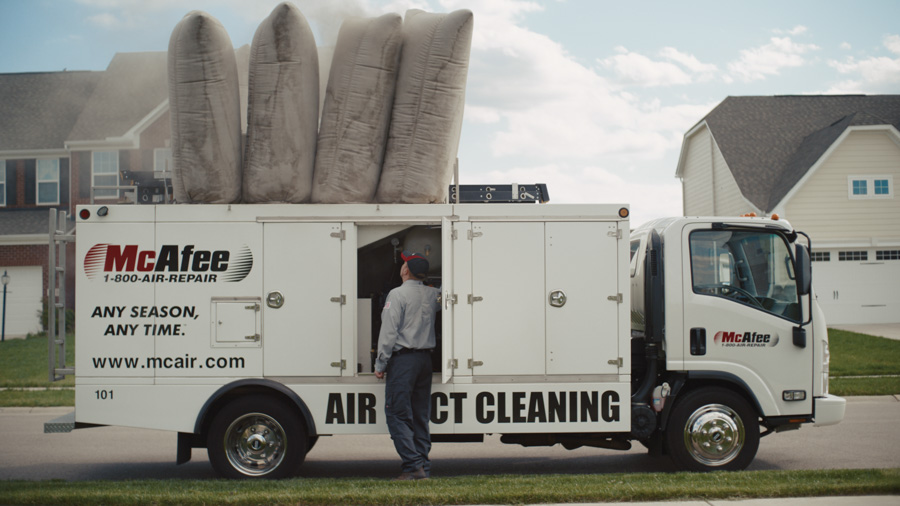
There's a big difference between a thorough, professional duct cleaning and a basic filter swap. McAfee's NADCA-certified technicians use truck-mounted vacuum equipment that creates powerful negative pressure inside your duct system—pulling accumulated debris out rather than just disturbing it. The process covers your supply and return ducts, the blower compartment, and key HVAC components, and it typically takes two to four hours for most homes.
After a proper duct cleaning, the difference in air quality is often immediately noticeable—less dust on surfaces, reduced stuffiness, and for many households, a meaningful improvement in allergy symptoms that medication alone wasn't achieving.
Duct Cleaning Is Just One Piece of the Puzzle
If allergy season is genuinely impacting the quality of life in your home, duct cleaning is a great starting point—but it works best as part of a broader approach to indoor air quality. McAfee also offers air filtration solutions including high-efficiency filtration systems, UV germicidal lights that target mold and bacteria inside your HVAC system, and iWave whole-home air purification technology. For households with serious allergy concerns, combining professional duct cleaning with upgraded filtration can make a significant difference.
Your spring AC tune-up is also a natural time to address air quality. When a McAfee technician services your system, they can assess your current filtration setup, check for any issues that might be contributing to poor air circulation, and make recommendations tailored to your home and your household's specific needs.
Don't Wait Until Symptoms Are at Their Worst
The smartest time to schedule duct cleaning is before peak pollen season hits—ideally in early spring before the heaviest tree and grass pollen counts arrive. Once April and May are in full force, you're already playing catch-up. Getting your ducts cleaned in late winter or early spring means your system starts the cooling season fresh, without redistributing a winter's worth of accumulated debris on top of an incoming wave of outdoor pollen.
McAfee Heating, Air Conditioning & Plumbing has been helping Miami Valley families breathe easier since 1990. With NADCA-certified technicians, truck-mounted equipment, background-checked staff, and a BBB Torch Award for ethics, McAfee brings the same commitment to indoor air quality that they've brought to heating and cooling service for over 35 years. They proudly serve Dayton, Kettering, Beavercreek, Centerville, Miamisburg, Springboro, Xenia, Fairborn, Bellbrook, and the surrounding communities.