Why Small AC Problems Never Stay Small
Air conditioners rarely fail without warning—they fail in stages, and the Miami Valley’s summer heat accelerates every one of them. Here’s a rough breakdown of how a typical AC failure unfolds:
- Stage One – Subtle Changes: A cooling cycle that runs a little longer than it used to. A faint new hum or rattle. Air from the vents that’s cool but not quite cold. These early signals are easy to dismiss—and they’re exactly when a repair is cheapest and simplest.
- Stage Two – Performance Decline: The system starts struggling to keep up on hot afternoons. Rooms cool unevenly, the unit cycles on and off more frequently, and your electric bill begins creeping upward. The underlying problem is now forcing other components to work harder to compensate.
- Stage Three – Strain on Major Components: Whatever started the problem—a weak capacitor, a slow refrigerant leak, a worn motor—is now putting direct stress on the compressor, the heart of your system and its single most expensive part. Damage at this stage often turns a routine repair into a major one.
- Stage Four – The Breakdown: Air conditioners fail under load, which means total breakdowns cluster on the hottest days of the year—precisely when repair schedules across the region are at their fullest and your home needs cooling the most.
The rule of thumb: If your air conditioner is doing anything it wasn’t doing last summer—new sounds, new smells, longer run times, weaker airflow—it’s asking for help. The earlier a technician sees the problem, the more options (and the lower the cost) you’ll have.
What Waiting Actually Costs You
It’s tempting to push a struggling air conditioner through “just one more season.” But delaying a needed repair almost never saves money—it just moves the cost down the road and adds interest. A system running with an unresolved problem consumes more energy, wears out faster, and puts its most expensive components at risk every single day it operates.
That means every day a known issue goes unaddressed, you’re paying twice—once in higher energy bills, and again in accelerated wear on parts that aren’t cheap to replace. For households heading into an Ohio summer, that math only gets worse as the temperatures climb.
Summer Heat Makes Everything Worse
Early summer is a particularly vulnerable time for an air conditioner that’s already struggling, because it’s when demand on the system ramps up fastest. As the Miami Valley moves from mild spring days into sustained heat, a few things happen simultaneously:
- Run Times Get Longer: An AC that coasted through 75-degree afternoons now runs for hours at a stretch in 90-degree heat. Any weakness in the system—a failing capacitor, low refrigerant, a tired motor—gets exposed and amplified under that extended load.
- Small Problems Cascade: AC components don’t fail in isolation. A weak capacitor stresses the compressor. A refrigerant leak forces longer, hotter run cycles. A clogged condensate drain backs water up into components that were never meant to get wet. One neglected issue routinely becomes two or three.
- Humidity Adds a Second Job: Your AC doesn’t just cool the air—it removes moisture. Ohio’s humid summers mean a struggling system falls behind on both jobs at once, leaving your home sticky and clammy even while the unit runs constantly.
- Repair Schedules Fill Up: When the first major heat wave hits, every HVAC company in the region gets flooded with emergency calls. Addressing a known problem before peak season means faster scheduling—and no days spent sweating it out waiting for a technician.
Signs Your AC Needs Repair—Before It’s Too Late
It’s not always obvious that a breakdown is coming. But there are some reliable signs worth paying attention to:
- Warm or Weak Airflow: If the air from your vents isn’t as cold as it used to be, or the airflow feels noticeably weaker, your system may be dealing with a refrigerant issue, a failing compressor, or a blower problem. None of these fix themselves.
- Strange Noises: Grinding, squealing, rattling, or banging sounds are never normal. A squeal often points to a belt or motor bearing on its way out; grinding can mean metal-on-metal contact inside the unit. Caught early, that’s often a simple component swap instead of a full motor replacement.
- Short Cycling: If your AC turns on and off in rapid bursts without completing a full cooling cycle, it’s putting enormous strain on the compressor and driving up energy costs at the same time.
- Rising Energy Bills: When an air conditioner has to work harder to deliver the same cooling, your electric bill is usually the first place it shows. A steady climb in summer energy costs—without a change in your habits—is one of the most reliable early indicators of a developing mechanical problem.
- Moisture or Leaks Around the Unit: Water pooling near your indoor unit can point to a clogged condensate drain—a quick fix if caught early, but a source of water damage and mold growth if ignored. Refrigerant leaks are more serious and need professional attention right away.
What a Professional AC Repair Actually Looks Like
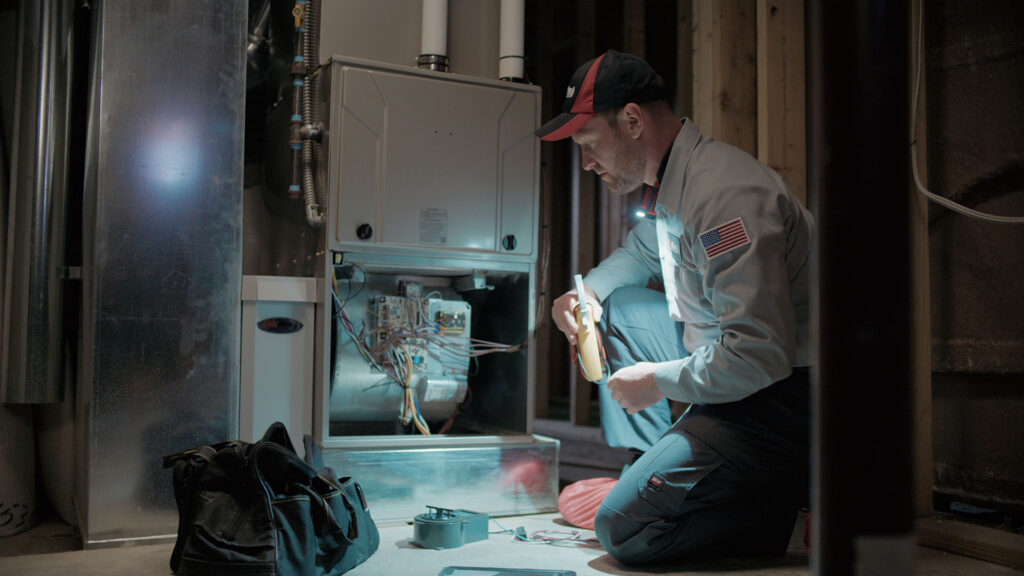
There’s a big difference between a thorough, professional AC repair and a quick patch of the obvious symptom. When a McAfee technician arrives, they perform a full diagnostic of your system to identify the root cause—not just the part that finally made noise. You get a plain-language explanation of what’s wrong, your options for fixing it, and an upfront price before any work begins. McAfee’s service vehicles are fully stocked, which means most repairs are completed in a single visit.
After a proper repair, the difference is often immediately noticeable—colder air, shorter run times, a quieter system, and for many households, a meaningful drop in energy costs that had been quietly climbing for months.
$100 Off Makes Right Now the Time to Act
If your air conditioner has been showing any of the warning signs above, there’s an extra reason not to put it off: for a limited time, McAfee is offering $100 off any AC repair of $500 or more. The repairs that tend to reach that range—compressor-related issues, refrigerant leaks, motor replacements—are exactly the ones that get dramatically more expensive when they’re left to compound. Taking care of the problem now means a healthier system, a smaller bill, and a summer without crossing your fingers every time the unit kicks on.
Don’t Wait for the Hottest Day of the Year
The smartest time to schedule an AC repair is the moment you notice something is off—ideally before sustained summer heat arrives. Once July and August are in full force, you’re already playing catch-up: the system is under maximum strain, the damage is compounding, and repair schedules across the region are at their fullest. Acting early means your air conditioner heads into the hottest stretch of the year ready for it, instead of one heat wave away from quitting.
McAfee Heating, Air Conditioning & Plumbing has been helping Miami Valley families stay comfortable since 1990. With certified technicians, fully stocked service vehicles, upfront pricing, background-checked staff, and a BBB Torch Award for ethics, McAfee brings the same commitment to your air conditioner that they’ve brought to heating and cooling service for over 35 years. They proudly serve Dayton, Kettering, Beavercreek, Centerville, Miamisburg, Springboro, Xenia, Fairborn, Bellbrook, and the surrounding communities.
